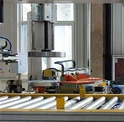
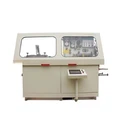
CNC bending machine is a common metal processing equipment that can bend metal materials in curves and has high-precision processing capabilities. In the process of CNC bending machine machining, precision control is a very important task, playing a critical role in the quality and compliance of the machined parts.
1, This article provides a detailed introduction and analysis on how to control the accuracy of CNC bending machines during processing.
1. The CNC bending machine needs to rely on an accurate CNC system for control during the machining process.
The CNC system can control the operation of the bending machine based on pre-set processing parameters, including bending angle, bending position, bending force, etc.
Through accurate control of the numerical control system, it is possible to ensure that the size and shape of the processed parts meet the requirements.
2. The CNC bending machine also needs to choose suitable machining tools and fixtures for processing.
The selection of cutting tools directly affects the accuracy of machining parts. Common cutting tools include cutting tools, pressing tools, and top cutting tools.
The cutting knife is used to cut metal materials, the pressing knife is used to stabilize and fix the workpiece on the workbench, and the top cutting knife is used to limit the downward pressure of metal materials.
3. CNC bending machines also require regular maintenance and upkeep of the processing equipment.
The purpose of maintenance and upkeep is to ensure the normal operation of equipment and the stability of machining accuracy.
Maintenance includes equipment cleaning, lubrication, and fastening. Maintenance includes troubleshooting and repairing equipment.

2, In the specific processing, the following aspects need to be noted to control accuracy:
1. Select appropriate process parameters.
The process parameters include bending force, bending angle, and bending position.
These parameters need to be selected reasonably based on the specific requirements and material properties of the parts.
Parameters that are too large or too small can cause a decrease in machining accuracy.
2. Ensure the consistency of the process.
When performing continuous processing of the same process on a CNC bending machine, it is important to ensure that the process parameters and equipment status are as consistent as possible for each processing.
This can eliminate the influence of human factors and improve the stability of machining accuracy.
3. Optimization of material selection and cutting methods for processing.
Different materials have different requirements for bending processing, and it is necessary to choose the appropriate cutting method and bending process according to the actual situation.
For materials with high hardness, laser cutting can be chosen to ensure cutting accuracy.
4. Use appropriate fixtures and tools.
The design and selection of fixtures and tooling also have a significant impact on machining accuracy.
The stability and rigidity of the fixture can ensure the stability of the position and shape of the workpiece during the machining process, thereby improving machining accuracy.
5. Quality inspection and correction during the processing.
During the processing, quality inspection and correction should be carried out at all times.
By using measuring instruments to detect the differences in size and shape of parts before and after processing, and taking timely corrective measures to ensure the accuracy of processing.
6. Auxiliary means
In order to improve machining accuracy, some auxiliary means can also be used, such as optimization and simulation of CNC programming, monitoring and data analysis of the machining process, etc.
These methods can optimize and improve the machining process from both theoretical and practical perspectives, further enhancing the accuracy and stability of the machining process.